How to organise a mixed vinyl and CD collection so you can find anything
The awkward record is rarely the one by your favourite band. It is the soundtrack you filed under its composer, the compilation you remember by its cover, or the CD kept somewhere else because you also own the LP.
A mixed collection needs a rule that survives those cases. For most shelves, separate vinyl and CD zones with the same artist alphabet are a sensible starting point. Keep a short written rule for exceptions and give anything stored elsewhere an address. Then judge the arrangement by whether you can find a record and put it back without reconsidering the system.
Count formats and measure the shelf
Count the things that occupy space: LP jackets, CD cases, singles and boxes. A three-disc set in one case is one object to file. A box with several separate sleeves may be one object or several, depending on whether you keep it assembled. Make that decision before counting.
Measure the usable height, depth and width of each compartment, including the clearance needed to lift an item out. Try an actual sleeved LP, a thick gatefold, a CD and your largest box. Leave the outer sleeves on during the check if that is how you store them. Our outer-sleeve guide covers the separate question of sleeve material.
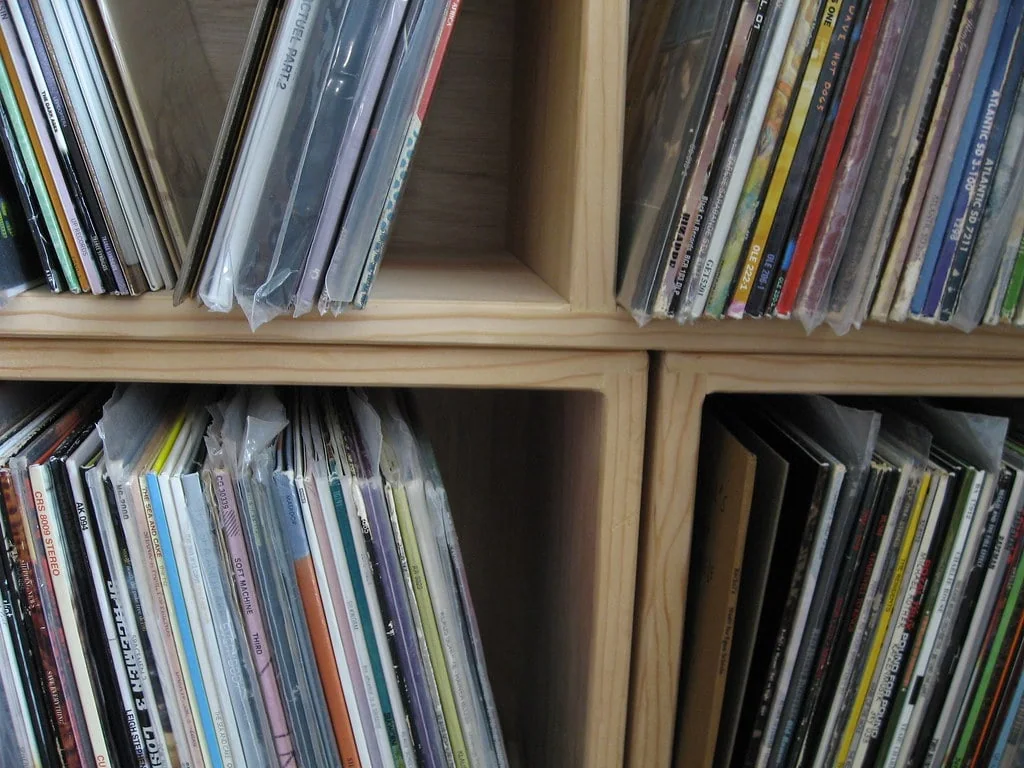
Keep discs upright and supported, and check that the shelving is suitable for the load. The Library of Congress recommends upright storage and advises against mixing grooved discs of different diameters. Give singles their own supported section rather than slipping them between LPs. *1
Choose a structure you can maintain
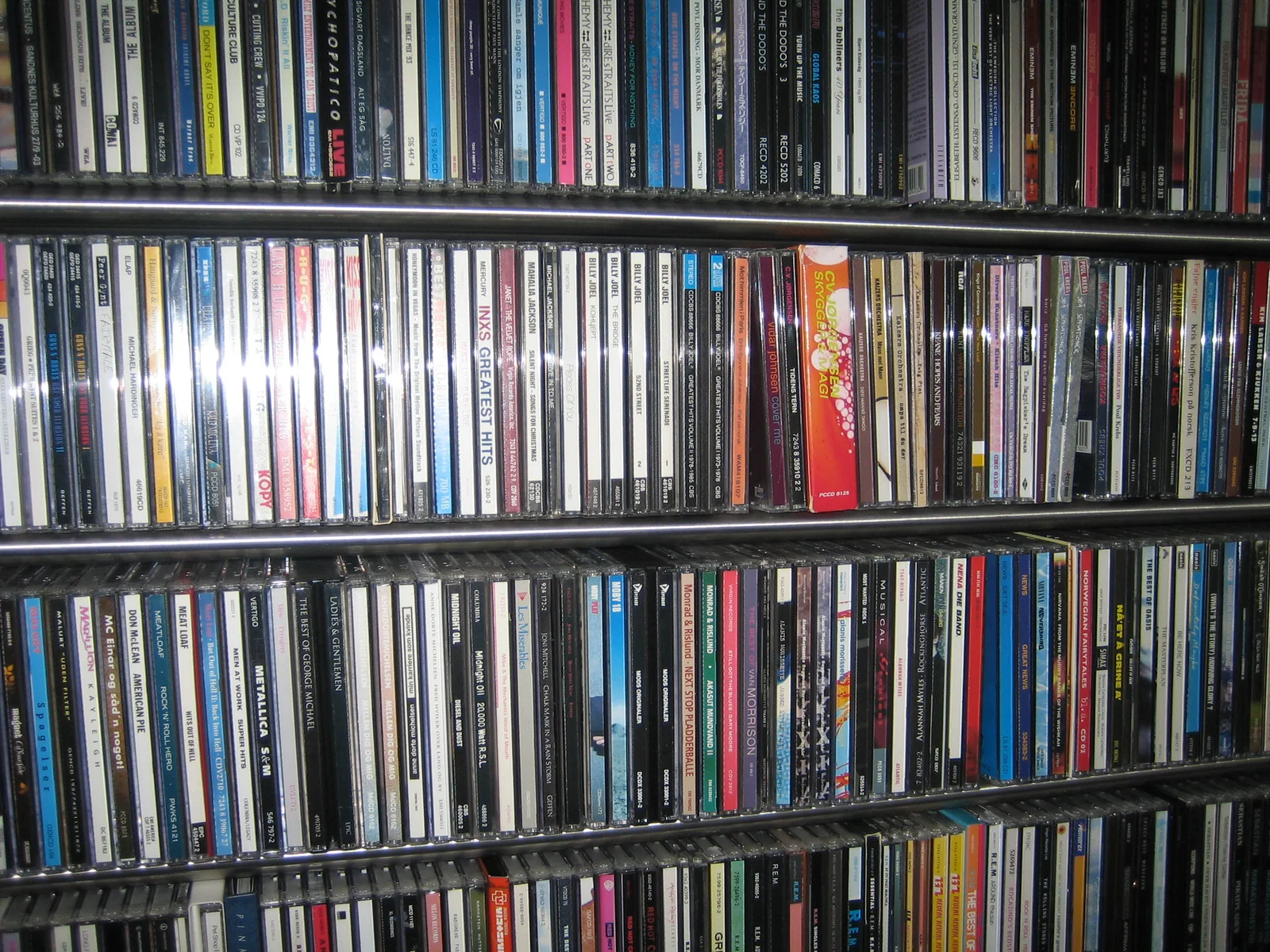
Separate format zones, one alphabet. File LPs A to Z in their compartments and CDs A to Z in theirs, using identical rules for names. This is the simplest option when the two formats need different shelf heights or live in different rooms. You make two small searches when you want to see everything by an artist, but each search is predictable.
A shared listening sequence, with size divisions. If you browse by artist before choosing a format, give an artist or letter range adjacent LP and CD sections. A shelf unit might have LPs A to F below a shallower CD section marked A to F. Keep each format physically supported; the shared sequence is an organising rule, not an instruction to sandwich CD cases between jackets.
The second arrangement brings related music closer together, but it needs more space planning. A new run of CDs can fill its section long before the adjacent vinyl section. Try it on one letter range before moving the whole collection.
Write the alphabet rule before moving records
Surname filing and first-name filing both work. Choose whichever you naturally reach for and use it across formats. The troublesome choice is changing your mind halfway through the shelf.
Here is one possible house rule, offered as an example rather than a universal standard:
- File solo performers by surname: Joni Mitchell under M. Keep a mononym such as Björk under its own initial.
- File bands by their name, ignoring an initial “The”: The Cure under C. Keep other words in place, so A Tribe Called Quest goes under A.
- Put names beginning with digits in a numbered section before A; arrange that section by the opening number, then alphabetically where numbers match.
- Ignore punctuation and accents for the main alphabet. AC/DC goes with ACDC; Björk sorts as Bjork.
- Within an artist, file by album title. Ignore an opening A, An or The in titles too, if you want the same convention there.
Album-title order avoids having to decide whether a reissue belongs under its original album year or its pressing year. Chronological order is perfectly workable if you prefer following an artist's career; write down which year you mean.
For an ambiguous artist name, decide once and add an alias to your rule sheet: “PJ Harvey: H.” The sheet need only contain choices you might otherwise forget.
Give awkward records a permanent home
Use the artist alphabet for ordinary artist albums, then make a few explicit exceptions. Too many genre sections turn a new arrival into a debate about genre.
| Item | A workable filing rule | What to note |
|---|---|---|
| Various Artists compilation | A Compilations section, ordered by title | Ignore “Various Artists” when sorting within that section. |
| Soundtrack | A Soundtracks section, ordered by film or programme title | Use the title you would ask for, even when one composer made the score. |
| Classical release | A Classical section, composer first, then work | For several composers, use the album title in a marked Mixed Composers subsection. |
| Oversized box | A separate Boxes location when it will not fit safely | Leave a pointer in its normal artist or category position. |
| Split release | File under the first credited artist printed on the release | Add a pointer under the other artist if you are likely to look there. |
| The same album on LP and CD | Keep each copy in its format's section | Record both locations together when you want a single overview. |
Two recordings of the same classical work can sit together, then sort by conductor or principal performer. Pick the credit that helps you distinguish your copies. Keep multi-disc sets together unless you have a specific reason to split them; the location note should lead to the complete set.
Give the shelves addresses
Label compartments, not individual positions. V1 might mean vinyl compartment one, C2 CD shelf two and B1 the box-set shelf. An album can move a few places as the alphabet expands while its address stays valid.
Make the labels visible from where you browse. Add letter-range dividers where the search becomes slow, and use a clearly labelled card for an item filed elsewhere. Attach labels to dividers or shelving rather than original artwork.

Consider this hypothetical layout: two LP compartments, two CD shelves and one box shelf.
| Shelf code | Contents | Example lookup |
|---|---|---|
| V1 | LP artist alphabet A to L | The Cure: C, then album title |
| V2 | LP artist alphabet M to Z, followed by labelled special sections | Joni Mitchell: M; a soundtrack: Soundtracks |
| C1 | CD artist alphabet A to L | The Cure: C, then album title |
| C2 | CD artist alphabet M to Z, followed by labelled special sections | Joni Mitchell: M; a compilation: Compilations |
| B1 | Oversized boxes, with artist or category labels | Follow the pointer left at the normal filing position |
The same album on vinyl and CD gets a compact location note such as LP: V1; CD: C1. A box receives B1, with its name on the pointer at the ordinary artist position. Those notes make a separate format zone searchable without pretending everything fits together physically.
Record exceptions where you will look for them
A notebook, spreadsheet or location field in your existing catalogue is enough. Record the artist, title, format and location. Add a copy description only when two entries would otherwise be indistinguishable.
Keep a short key beside the shelves so someone else can interpret V2. If an album moves to another room, update its location at the time. Use a named shelf or compartment even for records kept near the desk.
Run a five-item retrieval test
Choose five items: an ordinary artist album, a Various Artists compilation, a soundtrack or classical recording, an oversized box and an album you own on both formats. Ask another person to locate them using the labels and rule sheet, or repeat the five lookups yourself after you have used the shelves for a while, following the written rules.
Note the first place you look, any hesitation and the actual location. Finding the record is only half the check: return it using the written rule. If two locations seem equally plausible, add a pointer or simplify that exception before moving more shelves.
You can time the search if speed matters to you, but a consistent first choice is a better early target than an impressive number. One missed box is useful feedback, not a reason to alphabetise the entire room again.
Leave somewhere for the next arrival
Keep enough room in each active section to insert a few more records without squeezing or pulling a whole block out. Use dividers to support the remaining gap rather than leaving LPs leaning into it.
Give unfiled purchases one small, labelled intake area. When it fills, file the records before expanding the pile. Choose their permanent locations as they enter the collection, including the odd compilation and the inconvenient box.
Sources and notes
*1. Library of Congress: Care, Handling, and Storage of Audio Visual Materials. Upright storage, adequate shelf support and separate storage for grooved discs of different diameters. Checked 25 October 2026. The alphabet, location codes and retrieval procedure above are editorial recommendations. Back to text