PVC record sleeves: the protection worth replacing
A clear sleeve can protect a record jacket from handling and shelf wear. The material matters more than how substantial it feels. For long-term storage, flexible PVC is a poor choice: the Canadian Conservation Institute recommends avoiding it in preservation work because its plasticisers can migrate and stain objects in contact with it. Its materials guidance explains the problem.
That is a reason to replace a PVC sleeve, not a verdict that every record stored in one is ruined. Start with what the packaging is made from, whether it touches the playing surface, and its present condition.
The record and the sleeve are different products
Most conventional vinyl LPs are themselves made from PVC-based material. That doesn't make every PVC product suitable for storing them. A flexible sleeve and a comparatively rigid record use different formulations to do different jobs.
The Canadian Conservation Institute identifies vinyl as the most stable of the historical grooved-disc types in its recording-media care guide. The same guide warns against PVC sleeve holders. The finished products behave differently because their formulations differ.
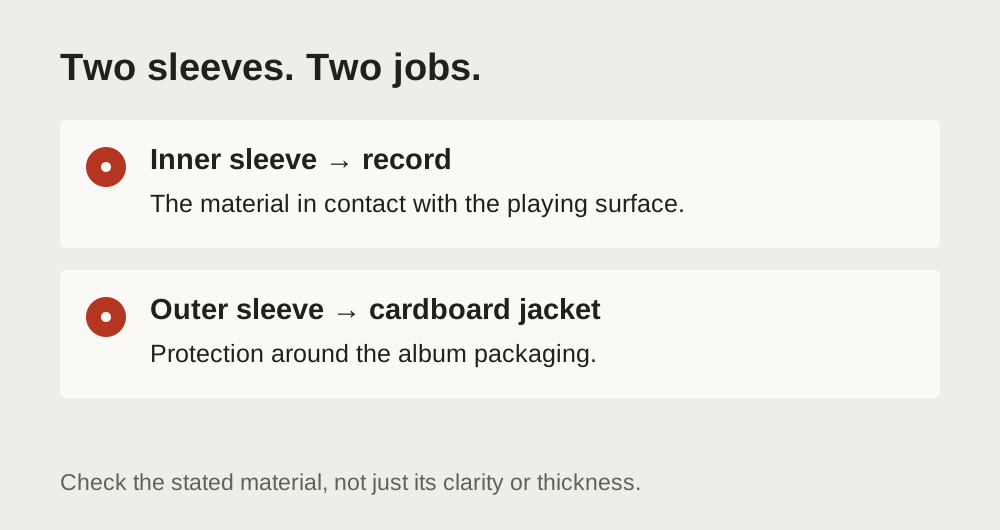
Also separate the two kinds of sleeve. An inner sleeve holds the disc and contacts its surface. An outer sleeve normally surrounds the cardboard jacket. A record supplied directly in a transparent pouch has no cardboard jacket performing that separating job. Check what is actually touching what before buying replacements.
What goes wrong with flexible PVC?
Plasticisers are additives that make a material more flexible. In flexible PVC, they can move out of the material as it ages. The sleeve may become yellowed, distorted, brittle or sticky, and material in contact with it can become stained. A thicker sleeve can still have the same material problem.
There is no useful universal countdown for a sleeve on your shelf. Its formulation, condition and storage history matter. Replace unsuitable packaging before relying on a visible change to tell you when to act.
Be careful with the explanation usually called “off-gassing”. The Canadian Conservation Institute distinguishes documented plasticiser migration from the suspected release of hydrochloric acid, which it says has not been confirmed under normal museum conditions. Its technical bulletin supports avoiding flexible PVC without turning every account of a hazy record into the same diagnosis.
Choose an inner and an outer for their jobs
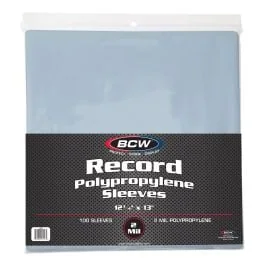
For the disc itself, a purpose-made high-density polyethylene inner sleeve is a well-established choice. The Library of Congress care guidance recommends replacing grooved-disc sleeves with HDPE where possible. Keep printed original inners for their lyrics, credits and artwork; preserving those doesn't require continuing to slide the record against them.
For an outer sleeve, look for an explicit material description:
- PE, polyethylene: available in record-sleeve products and generally less optically clear than PP or polyester.
- PP, polypropylene: a clear film used in protective enclosures. Buy a sleeve specified for the jacket's size and thickness.
- PET, polyester: the material also sold under trade names such as Mylar and Melinex. Use a suitable enclosure product, rather than assuming every item carrying a trade name has the same specification.
The Library of Congress has used HDPE inners with polyester dust jackets, and publishes separate supply specifications for polyester jackets around card record sleeves. The distinction is useful: one material choice protects the playing surface, another protects the packaging.
Don't identify a material by its shine
Clarity, thickness and softness are not a material specification. A transparent sleeve could be made from several polymers. Nor does a seller calling something “archival” tell you exactly what it contains.
Look for the polymer name in the product description or original pack. If you still have an order receipt, use it to identify the product. Otherwise ask the supplier: is this PVC, polyethylene, polypropylene or polyester? For a lined inner, ask about the material facing the record. For an outer, confirm its dimensions and whether it comfortably accommodates a gatefold.
If the answer remains vague, choose a replacement with a stated material. Feel alone will not identify an anonymous sleeve reliably. Keep the replacement's packaging or product reference so this isn't the same puzzle next year.
Replace in a sensible order
Start with a disc sitting directly in a known PVC pouch, then any sleeve that is sticky, discoloured or distorted. Move the record into a suitable inner and give it proper jacket protection. Next, replace known PVC outers around cardboard jackets. Don't force a bulky gatefold into a sleeve that squeezes it shut.
If original packaging carries artwork or a unique sticker, document it and store it separately from the record. You can preserve that part of the release without leaving it in contact with the playing surface. If a sleeve has stuck to the disc, stop and seek conservation advice before trying to separate them.
Finally, give the replacements decent storage. Keep records upright and supported, away from direct sunlight, radiators and damp spaces. The Library of Congress places clean, stable conditions alongside good enclosures. Check the shelf conditions when replacing the sleeves, particularly if direct sunlight reaches the records.