VG, VG+ and Near Mint: how to grade a used record and its sleeve
If you want to buy, sell or simply catalogue a record, you need a way to describe its condition. Record grading gives you a shared scale, so a buyer, seller or someone browsing their own collection can understand how well a copy has been kept and what wear to expect.
This guide uses the Goldmine-based scale adopted by Discogs. You will often see its grades shortened to VG (Very Good), VG+ (Very Good Plus) and NM (Near Mint). Each describes a level of condition, from visible wear and audible noise at VG to a nearly perfect copy at Near Mint. We’ll work through what those differences mean and how to assess your own record.*1
The record and its sleeve receive separate grades because they can age very differently. A well-kept disc might sit inside a battered jacket. In a listing marked VG+/VG, the first grade describes the record and the second the sleeve. A short condition comment then explains the marks, wear or playback noise behind those grades.
Start with the correct edition
Check that the record belongs with the sleeve and that the edition includes the parts you expect. A poster missing from one release may never have accompanied another. If the label, catalogue number or packaging leaves you unsure, use our pressing-identification guide before describing the package as complete. Keep the release reference beside your condition notes so the two jobs remain connected.
Prepare the inspection
Wash and dry your hands. Support the record by its edges and label area; keep fingers off the grooves. Use a clear work surface and a clean, soft support if you need to put the disc down. Careful handling matters during inspection too.*2
Choose a strong light and inspect both sides under it. Tilt the record slowly so the light travels across each band of music. Keep that same light for the next copy rather than comparing one in a dim shop corner with another beneath a desk lamp. Goldmine recommends strong lighting and a conservative overall assessment.*3
Remove loose surface dust gently with a suitable record brush, following the grooves. Don't scrub an unidentified deposit to see what's underneath. If dirt prevents inspection, put cleaning before the final grade. The Vinyl Record Manufacturers Association recommends a gentle dry brush before wet cleaning.*4
Inspect the record
Work from the outer edge towards the label on side A, then repeat on side B. Write observations before deciding on a grade. That prevents an early impression of “quite nice” from swallowing a defect found later.
| Check | What to record |
|---|---|
| Scuffs and fine lines | Side, affected track or area, and whether the mark is isolated or widespread |
| Distinct scratches | Where the line begins and ends; which bands of music it crosses |
| Possible groove wear | Areas that look different from their surroundings; keep the cause provisional until playback helps |
| Shape | Any visible edge lift or dish; don't bend the disc flat to inspect it |
| Labels | Writing, stains, stickers, residue and wear around the centre hole |
| Spindle trails | Fine marks around the hole; record their presence without guessing a play count |
A line described as a “hairline” is still a visible line. The word does not establish that it is silent. Equally, a bright-looking surface cannot establish quiet playback. Take a photograph with the mark visible, then another showing its position on the side. A useful condition photograph locates the defect rather than using glare to hide it.
Keep fingernails away from the playing surface. You can describe a scratch and check its passage without adding a tactile test to the inspection.

When play grading changes the answer
Play grading means listening to the copy being described. A sample of the opening track is a spot check, not a play grade for the whole album.
For a full check, listen to both sides on a correctly set-up turntable with a clean, suitable stylus. Pay attention to quiet passages, the beginning of each side and the fades. When a visible scratch crosses a track, note what happens there. Use the same normal listening level throughout; turning the volume down for the quiet section defeats the comparison.

Keep three things separate in your notes: where you listened, what you heard, and what you think caused it. “Repeated click during the opening of A2” is a useful observation. “Previous owner used a worn stylus” is an explanation you cannot obtain from that click alone.
If noise conflicts with the visual impression, the comment must say so and the grade must account for it. Don't average a clean-looking side with a troublesome one. For a multi-disc set, inspect and describe every disc; identify the side that limits the overall media grade.
Inspect the sleeve and inserts separately
Take the record out before checking the jacket. Look across the front and back, then along the spine and all three closed edges. Ring wear is the circular wear pattern corresponding to the disc inside. A seam split is an opening along an edge that should be closed.
Check corners, creases, rubbed artwork, writing, stickers, torn patches and water staining. Measure a split and say where it is. “Top edge split for 4 cm” gives the buyer something to assess; “usual age wear” leaves them guessing. Don't peel a sticker or repair a split just to improve the appearance for grading.
Lay the contents beside the jacket: printed inner, lyric sheet, booklet, poster and any other edition-specific pieces. Note each missing or damaged part. An attractive front cover doesn't resolve a missing insert.
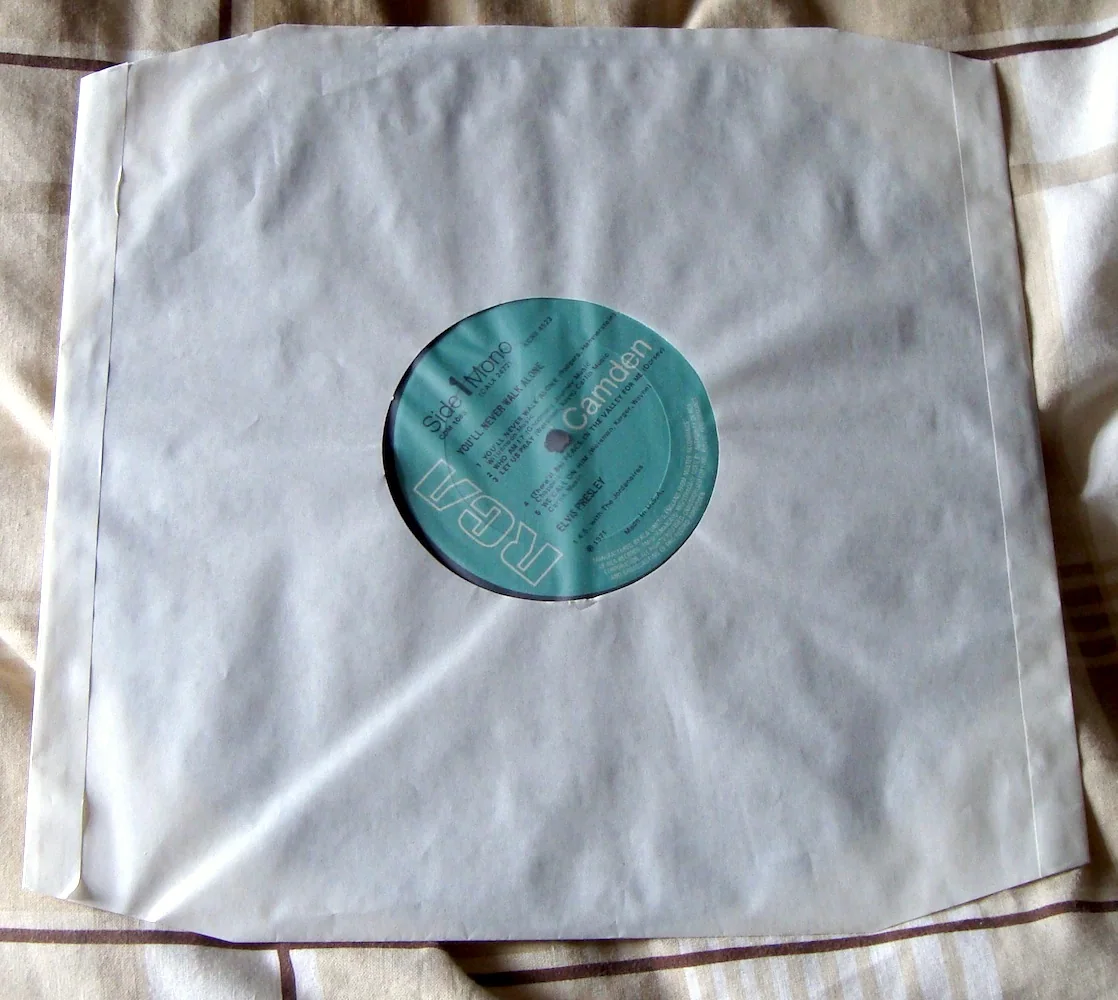
If an original printed inner is damaged, describe it even when the record now sits in a fresh replacement. The new sleeve protects the disc; it does not make the original packaging undamaged.
VG+ versus VG
Use the table to compare the kind and extent of the defects. It paraphrases Discogs' definitions; it isn't a points system.*1
| Aspect | VG+ | VG |
|---|---|---|
| Record surface | Minor scuffs or very light scratches that do not affect listening | More evident wear; scratches or groove wear can affect sound |
| Playback | Defects remain mainly cosmetic | Noise is apparent, particularly in quieter moments, without generally overpowering the music |
| Labels | Slight wear or discolouration; spindle marks possible | Writing, tape, stickers or residue may be present |
| Packaging | Slight cover wear; picture or inner sleeves may have lightly bent corners or a small seam split | More pronounced wear; writing, tape or sticker residue may be present |
An LP jacket with slight wear and a cut corner can still fit VG+. Writing on the jacket or more pronounced wear points towards VG. Assess the faults together: the VG category does not allow every listed problem at once.
Near Mint means nearly perfect, including playback and packaging. A noticeable crease or seam split rules out an NM jacket. Mint is a stricter claim of perfection and an unplayed record, to be used sparingly. A sealed package gives you no view of the surface inside.
At the VG/VG+ border, ask which defect needs explaining. If the answer is audible noise in several quiet passages, “only light marks” doesn't settle the grade. If the issue is a single small sleeve flaw, describe its location and size rather than inventing a grade halfway between the two.
Write the condition comment
Use this order: media grade / sleeve grade; disc defects; playback scope and result; packaging defects and missing parts. Keep praise out until the facts are clear.
Two hypothetical condition comments:
VG / VG+. Fine marks on both sides. Both sides played in full: light crackle during quiet passages, occasional ticks, no skips. Jacket has light corner wear; printed inner present.
VG+ / VG. A few faint scuffs. Visual inspection only; playback not checked. Jacket has ring wear and a name written on the back. Original printed inner missing; clean replacement supplied.
The second comment doesn't promise a quiet record. If you are buying and that is the deciding point, ask the seller about playback before paying. If you are selling and cannot defend the visual grade, inspect again or choose the lower supported grade. The condition comment should make the uncertainty easier to judge.
Know when to grade down or stop
Age and scarcity don't earn a more generous grade. Goldmine applies the same condition standard across decades. A sought-after record may justify a buyer accepting faults; those faults remain.*3
A record with substantial noise may belong below VG. Discogs' G and G+ categories still describe records that play through without skipping; severe warps, cracks and repeated skipping belong much lower. Don't put a visibly unsafe disc on the turntable merely to complete the form.*1
Stop routine handling if you find suspected mould, loose or flaking surfaces, or packaging stuck to the disc. Keep the item apart from the inspection area and seek appropriate care advice. Reducing the grade doesn't resolve a contamination or handling problem.
Once the condition note is settled, move to pricing the correct edition against comparable sales. Preserve the grade pair and the comment together. The next person needs to know what the record is like, not just which abbreviation you chose.
Sources and notes
- Discogs: How to grade items. Goldmine-based media and packaging definitions, including the lower grades. ↩
- Canadian Conservation Institute: caring for recording media. Handling and physical-damage precautions. ↩
- Goldmine: Record grading 101. Strong-light inspection, conservative grading, disclosure of defects and consistent standards across record ages. ↩
- Vinyl Record Manufacturers Association: cleaning care card. The preliminary loose-dust step; see the association's downloads page. ↩