Five record cleaners, from a manual bath to ultrasonic washing
Record cleaners differ in how they loosen dirt, remove the used fluid and dry the disc. Those steps determine how much work remains for you, especially when cleaning several records in one session.
Those details explain much of the difference between a modest washing bath and a machine that costs as much as a substantial record collection. These five options cover three approaches: manual washing, vacuum extraction and ultrasonic cleaning. Each suits a different routine. None can repair scratches.
At a glance
All prices are in US dollars. Compare the cleaning routine as well as the purchase price.
| Cleaner | USD price | Cleaning / drying | Record sizes | Main trade-off |
|---|---|---|---|---|
| Spin-Clean MKII Complete Kit | $79.99 | Manual bath / cloth drying | 7, 10 and 12 inches | You turn and dry every record |
| Pro-Ject VC-E2 | $549 | Hand-applied fluid / vacuum | 12 inches; separate kit for 7-inch singles | Loud suction; one side at a time |
| Okki Nokki ONE-DV | $749 | Hand-applied fluid / vacuum | 7, 10 and 12 inches | Manual brushing and flipping |
| HumminGuru NOVA | $799.99 | Ultrasonic / fan drying | 7, 10 and 12 inches | Pour water back before the next wash |
| Degritter MARK II | $3,600 | Ultrasonic / adjustable fan drying | 12 inches; adapters for 7 and 10 inches | High purchase cost; cooling pauses in long runs |
Prices checked on 10 September 2026. NOVA uses Stereophile’s 2026 US official-store price reference; the other prices link to the manufacturer, US distributor or retailer listing. Tax, delivery and optional accessories can change the total.
What the three methods ask of you
A manual bath holds cleaning solution and brushes against both sides of a record as you turn it. You supply the rotation, lifting and drying. It's a practical starting point if a little work at the kitchen table doesn't bother you.
A vacuum machine rotates the record while you apply and spread fluid, then sucks that fluid away. You still handle each side, but removing the dirty liquid and drying become much quicker operations. Budget for replacement contact strips as well as cleaning fluid.
An ultrasonic cleaner uses ultrasonic energy in a liquid bath to clean the immersed surface. The two machines here also drain and dry the record. That reduces the attention each disc needs, although water changes, filters and cleaning the machine remain part of ownership. Spin-Clean instructions, Pro-Ject's manual, Degritter's design
Spin-Clean Record Washer MKII: the inexpensive way to start washing
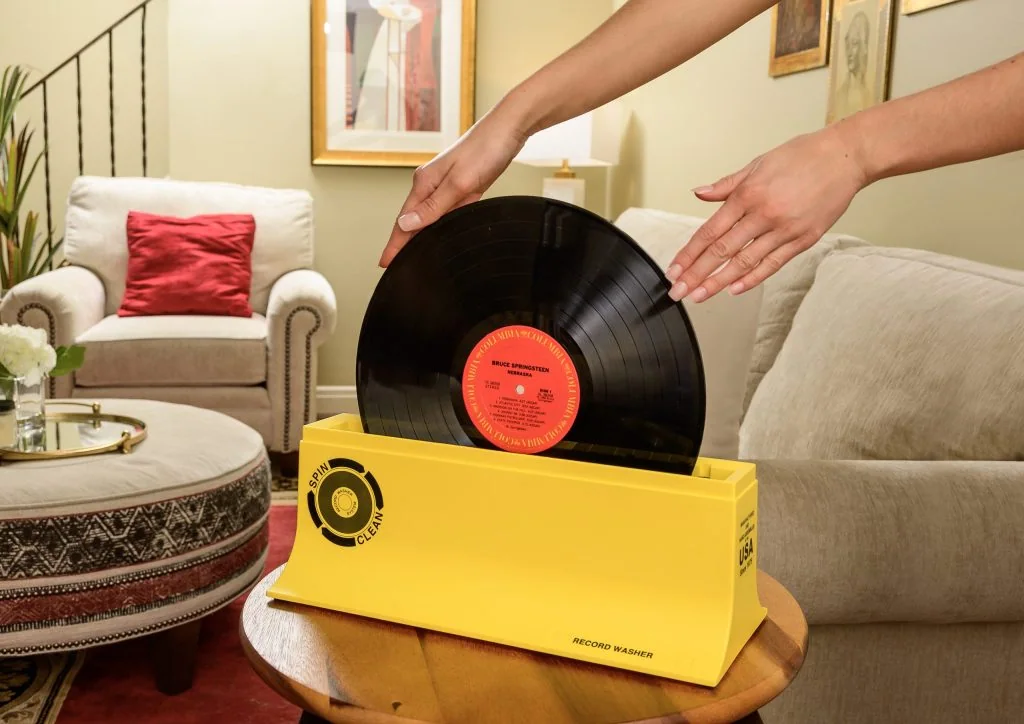
The yellow bath has a clear appeal: no motor, no vacuum and relatively little equipment to find space for. Rollers position the record between two cleaning brushes. You turn it through the solution, then lift it out and dry it with the supplied cloths. The Complete Kit is US$79.99 in the manufacturer's US shop, checked on 10 September 2026. Official kit and price
For someone buying a handful of second-hand records at a time, preparing a small batch can be a reasonable habit.
Independent listening reports are encouraging. SoundStage! Access's 2022 review reported less obvious surface noise, clicks and pops after cleaning used records. Hifi Chicken also heard a worthwhile reduction in background noise on a previously noisy LP. Those are reports about the reviewers' records, not a promise that every crackle on yours will disappear. SoundStage! Access review, Hifi Chicken review
The main drawback is the work after washing. Cloths need to be kept clean, you need a clean drying area, and the bath solution needs changing as it becomes dirty. Hifi Chicken specifically advised more frequent changes when washing dirty garage-sale finds. A large batch can turn the low purchase price into a considerable amount of handling.
Choose it for: occasional batches and a modest equipment budget. Think twice if: hand-drying is the step that will make you postpone cleaning altogether.
Pro-Ject VC-E2: a compact vacuum machine with a loud job
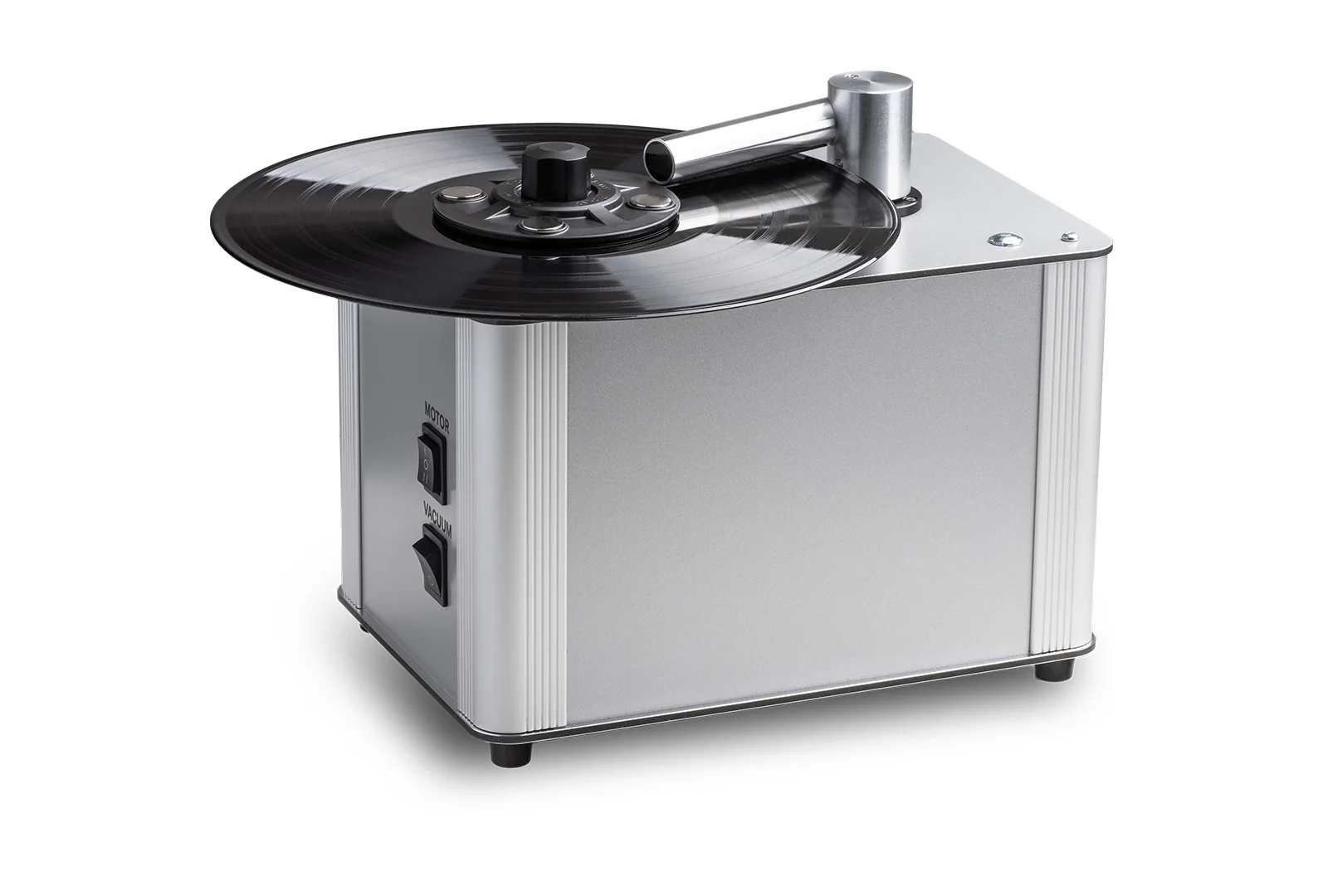
The VC-E2 puts a motor and vacuum extraction into a compact metal-bodied machine. Its magnetic clamp covers the label, and the supplied brush spreads the premixed Wash it 2 fluid before the vacuum arm removes it. The waste tank holds 0.5 litres. Standard operation covers 12-inch records; the 7-inch kit is sold separately. Official specification
The useful upgrade is control over fluid removal. You don't have to find somewhere to lay out a sequence of wet LPs. The label-sized support also leaves most of the underside clear of a full platter while you work on the upper side.
Bonedo's VC-E2 review praised reliable cleaning results and straightforward handling, but found the suction just as loud as the preceding model. The reviewer also used extra revolutions beyond the manufacturer's two-turn drying claim and occasionally found liquid around the clamp edge. That's a more useful expectation than assuming every disc emerges perfectly dry after a fixed number of seconds. Bonedo's review
This remains a manual washing process around a powered drying step. Apply fluid, spread it, extract it, inspect the surface, then turn the record over. Keep the suction strips clean and replace them when worn. Singles collectors should include the separate kit in their buying decision.
Choose it for: regular LP cleaning where compact size and vacuum drying matter. Think twice if: you need quiet operation or expect a button to do the whole wash.
Okki Nokki ONE-DV: a useful package for mixed record sizes
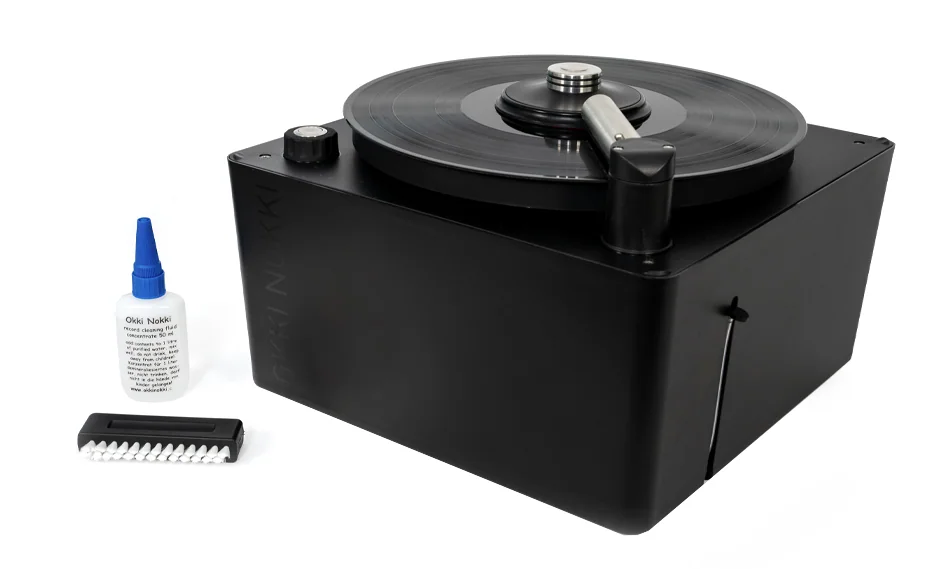
The current ONE-DV includes an adjustable vacuum arm for 12-, 10- and 7-inch records, a label cover and clamp, a dust cover and a waste-fluid level indicator. Its platter rotates in both directions. Those are practical inclusions if your shelves contain singles and ten-inch records alongside LPs. Manufacturer's current model
The adjustable arm is particularly valuable because changing record sizes doesn't require buying a separate arm for each one. The visible waste level also gives you a straightforward reminder to empty the reservoir.
Michael Bruss's September 2025 fairaudio review found thorough cleaning and liked the complete accessory package. He also put the manufacturer's quiet-operation claim into perspective: the vacuum still sounded like a handheld vacuum cleaner. He didn't hear a dramatic noise advantage over the Pro-Ject VC-E2. fairaudio's ONE-DV review
You still brush on the fluid yourself, clean one side at a time and maintain the arm's contact strips.
Choose it for: a mixed-format collection and an inclusive vacuum-cleaning package. Think twice if: “quiet” means cleaning beside someone listening to music.
HumminGuru NOVA: automatic washing and drying, with some pouring
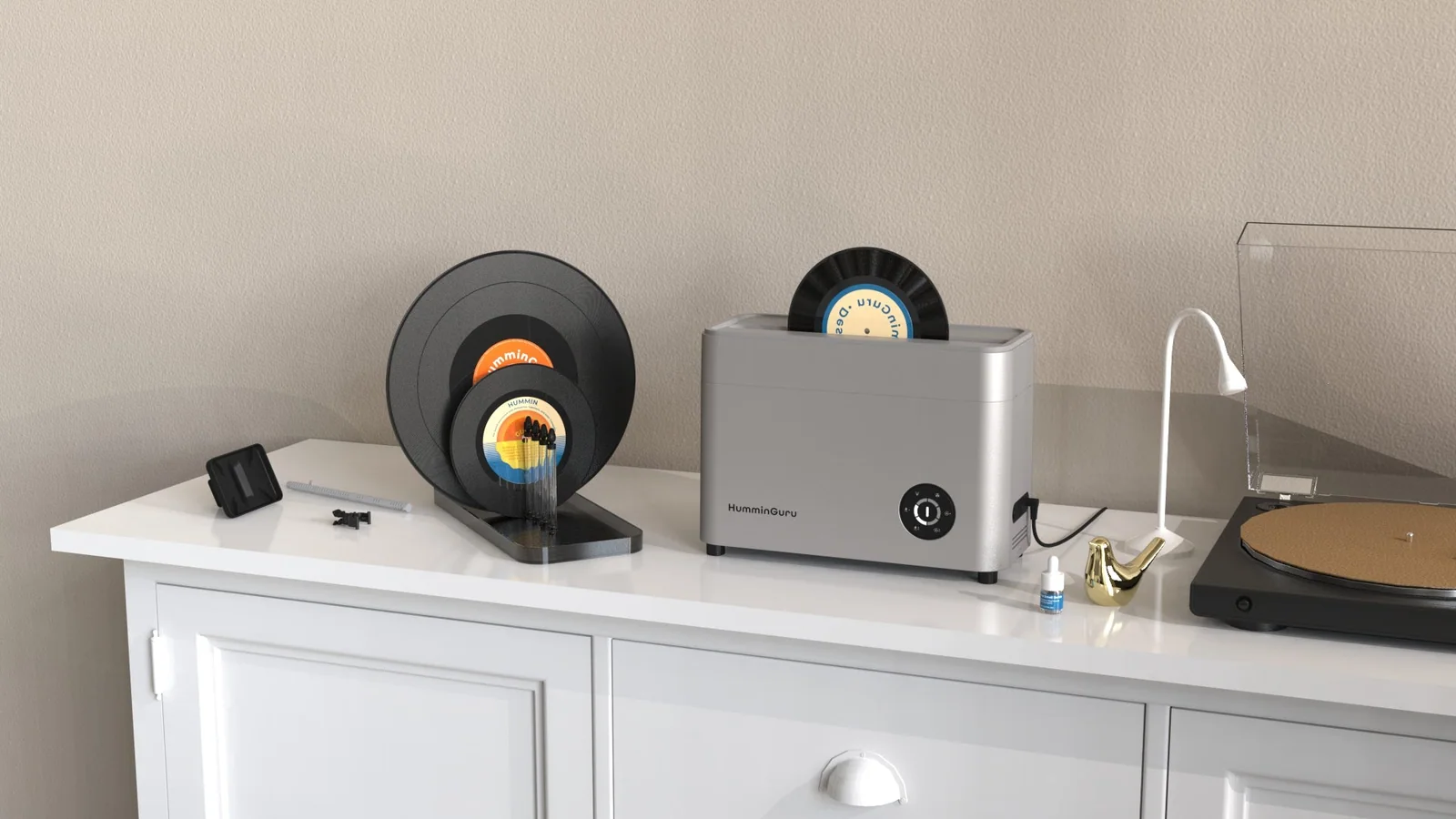
NOVA combines ultrasonic cleaning, draining and fan drying in a relatively slim unit. Adjustable wheels accommodate 7-, 10- and 12-inch records without separate record adapters. Drying settings are three or six minutes, and a heavy-wash mode extends cleaning to ten minutes. NOVA's documented features
The cleaner is available through the official shop.
The appeal is reduced supervision once the cycle starts. Both sides pass through the bath, then the machine drains and dries the disc. This is much easier to fit around another activity than brushing and turning every record yourself.
Paul Rigby's April 2025 review praised the cleaning performance and the inclusion of drying at this price level. His main operational complaint was refilling: the collected water must be poured back into the cleaning slot before each wash. He also wanted clearer record-size markings on the chassis. The Audiophile Man's NOVA review
Automatic cycles therefore don't mean a completely unattended batch. You still load each disc, manage the water and check that the record is dry before returning it to a sleeve. The manufacturer notes that drying results vary with conditions, so treat the timer as a setting rather than a guarantee.
Choose it for: ultrasonic washing with built-in drying in a compact unit. Think twice if: repeated refilling defeats the convenience you're buying.
Degritter MARK II: more control over an automatic routine
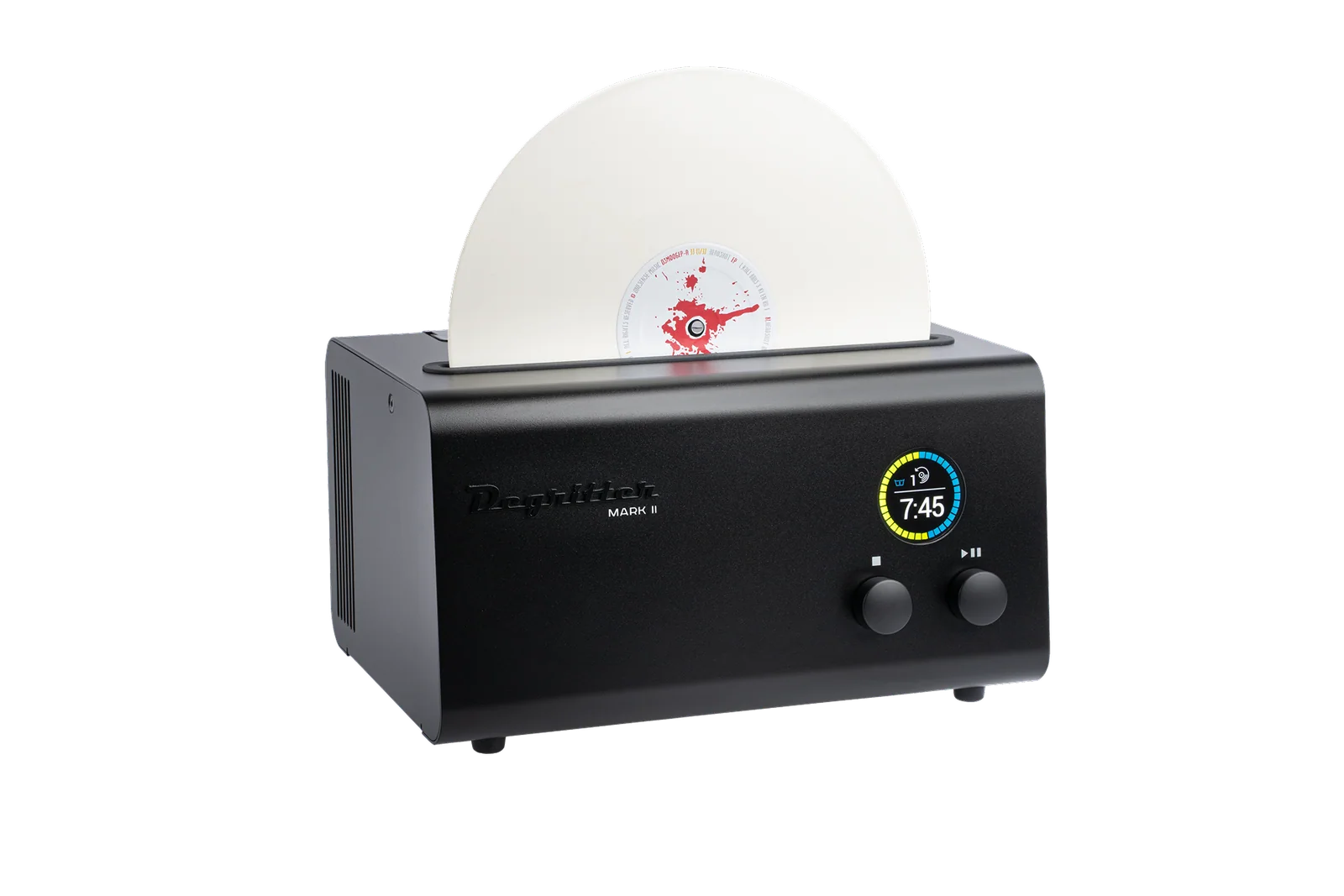
Degritter's MARK II adds active water filtration, temperature monitoring and adjustable drying time and fan speed. It supports a separate-tank rinse, while automatic cooling cycles manage rising water temperature. That combination gives you more control over a repeatable wash-and-rinse routine. Official MARK II features
The cost is substantial, and the practical benefit needs to justify it for your collection. Home Theater HiFi's reviewer cleaned 102 LPs and valued the reduction in manual effort. Their preferred wash, rinse and dry routine took about 15 minutes per record. They reported results at least as good as their previous hand-cleaning process, with improvements on some records. Home Theater HiFi's review
The same review found the drying fans considerably louder than the ultrasonic stage and described initially frustrating water-tank alignment. It also noted a fragile supplied fluid applicator.
Filtration doesn't eliminate changing water or maintaining the filter. Cooling pauses can also interrupt a long run. And cleaning cannot reverse wear: Audiophilia's enthusiastic MARK II review still described a damaged used record that repeated cleaning couldn't rescue. Audiophilia's review
Choose it for: frequent cleaning where adjustable automatic washing and rinsing earn their cost. Think twice if: your expectation is that premium machinery repairs damaged grooves.
Buy for the routine you'll keep
Before choosing, picture cleaning ten records. Include setup, turning discs, pouring water, drying, wiping down the machine and putting everything away. Also check the sizes you actually own and the cost of fluid, filters or contact strips.
Choose a process you can repeat comfortably. Drying space, noise and maintenance will affect how often you use the cleaner long after the purchase.