How to read vinyl deadwax and search matrix numbers on Discogs
Read the whole inscription from each side, search a clear section of it, then compare the candidate release against your complete transcription. That's the practical way to use deadwax on Discogs. A partial match is a lead; the rest of the record still has to agree.
Deadwax, also called the runout area, lies between the end of the music grooves and the centre label. Its markings may be stamped, hand-etched or both. Discogs' physical-record guide shows this area and explains its usefulness when similar-looking releases came from different manufacturers.
Often the first difficulty is simply reading a small inscription consistently. Get that onto paper before trying to work out what it means.
Get a readable view before opening another tab
Hold the record by its edge and label area, with the playing surface clear of the table. Use a steady light and change the angle between the light, your eyes and the record. Rotate slowly through the entire runout. A mark that vanishes in one reflection may become legible in another.
Try a magnifier or a close photograph if that helps. Take several overlapping photographs rather than relying on one picture of the whole disc. Include a separate shot of the centre label so you can tell which side the close-ups belong to later.
Don't rub anything into an inscription to make it visible. Change the light or viewing angle instead.
Inspect all the way around. Stopping after the largest number risks missing a smaller mark elsewhere. Once you've written down one side, turn the record over and start a fresh line for the other.
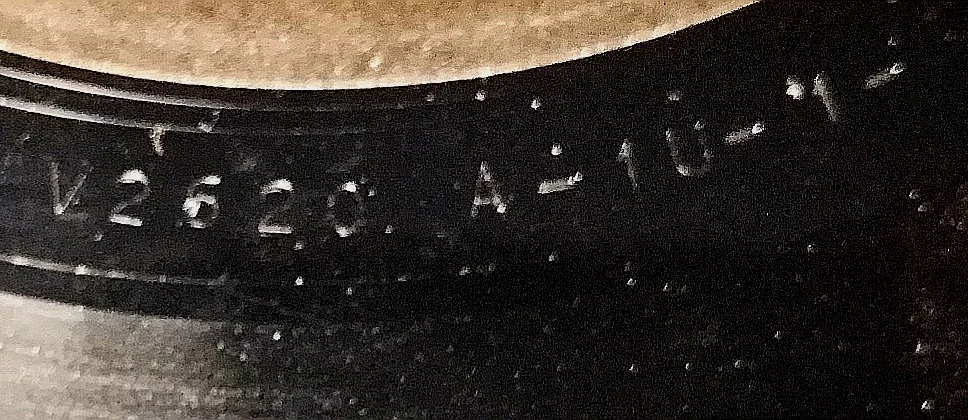

Transcribe first, interpret second
Keep two sets of notes: what you can read, and what you're unsure about. Preserve letters, numbers, punctuation and crossed-out marks in your full record of the inscription. Note which portions look stamped and which look handwritten.
Discogs' runout-entry rules call for the complete string for each side, preserving case and symbols. They also allow descriptions of unidentified symbols. You don't need to name an engineer to make a useful transcription.
A fictional notebook example:
| Location | What you can read | What needs another look |
|---|---|---|
| Side A | VT 042 A-1 followed by a small symbol |
Is the final character a 1 or an I? |
| Side B | VT 042 B-2 |
A faint mark opposite the main string |
Do not quietly replace the uncertain character with the one found in a promising listing. That is an excellent way to make any record match.
Keep the inscriptions on the paper label separate from those in the vinyl. A matrix number can resemble a catalogue number with a side suffix, but it can also be unrelated; other runout markings may have different functions. Discogs' glossary explains why these numbers should not all be treated as interchangeable.
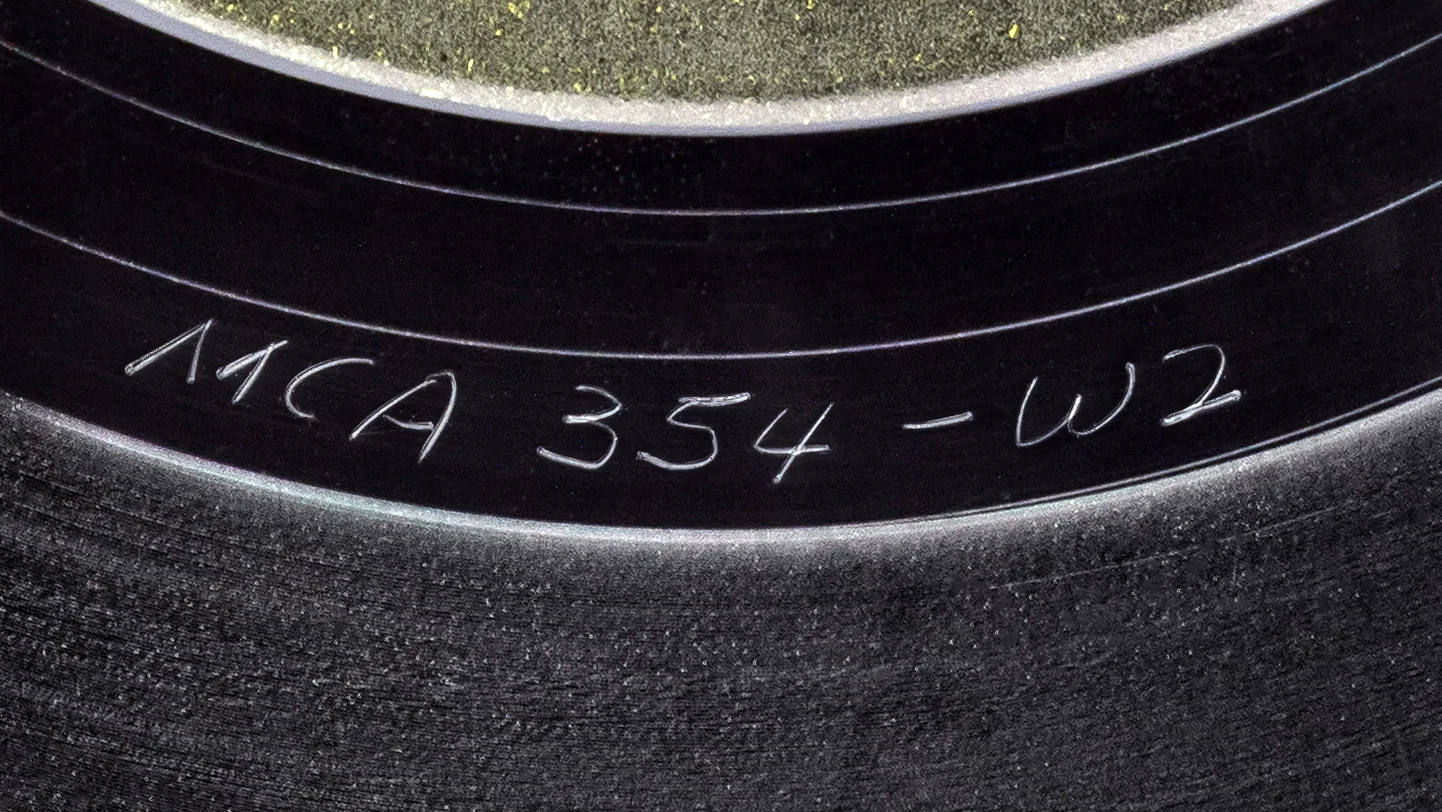

Search in short, controlled steps
On the Discogs website, start with the most legible, distinctive number group. Add the artist or title if the results are too broad. For a more specific query, Discogs' search documentation points to Advanced Search for matrix runouts and catalogue numbers.
If the full string returns nothing, try a shorter unambiguous section. This is a search tactic, not permission to ignore the remaining marks when choosing a release.
Using the example above, you could begin with VT 042 A-1. If you're unsure about the last character, try VT 042 with the artist, then inspect the candidate pages. Try the clearly read side B string separately. Record which search produced a useful lead so you don't keep repeating it.
If text search remains unhelpful, return to the artist and album, open likely vinyl releases and compare their identifier sections directly. This separates two problems: finding a page and deciding whether its evidence fits.
Compare complete sides and read the variant descriptions
On each candidate, read the runouts together with the descriptions identifying their sides and variants. A match for side A leaves side B unchecked. For a double album, repeat the comparison for all four sides.
Minor runout differences can be variants within one Discogs release; significant differences involving a company, credit or job number can indicate a separate release. Discogs explains this in its identifier guidelines. Neither “one character differs” nor “most of it matches” settles the question on its own.
Make a compact comparison: candidate link, matching sides, differences and missing information. If a page has several variant sets, note which set resembles yours. Don't combine unrelated lines from the page just to assemble a match that nobody has documented. An unlisted combination needs further checking; it does not by itself prove a different release.
A listed variant number is also no reason to announce a first pressing. A variant number identifies the listed variant; establishing which pressing came first requires separate evidence.
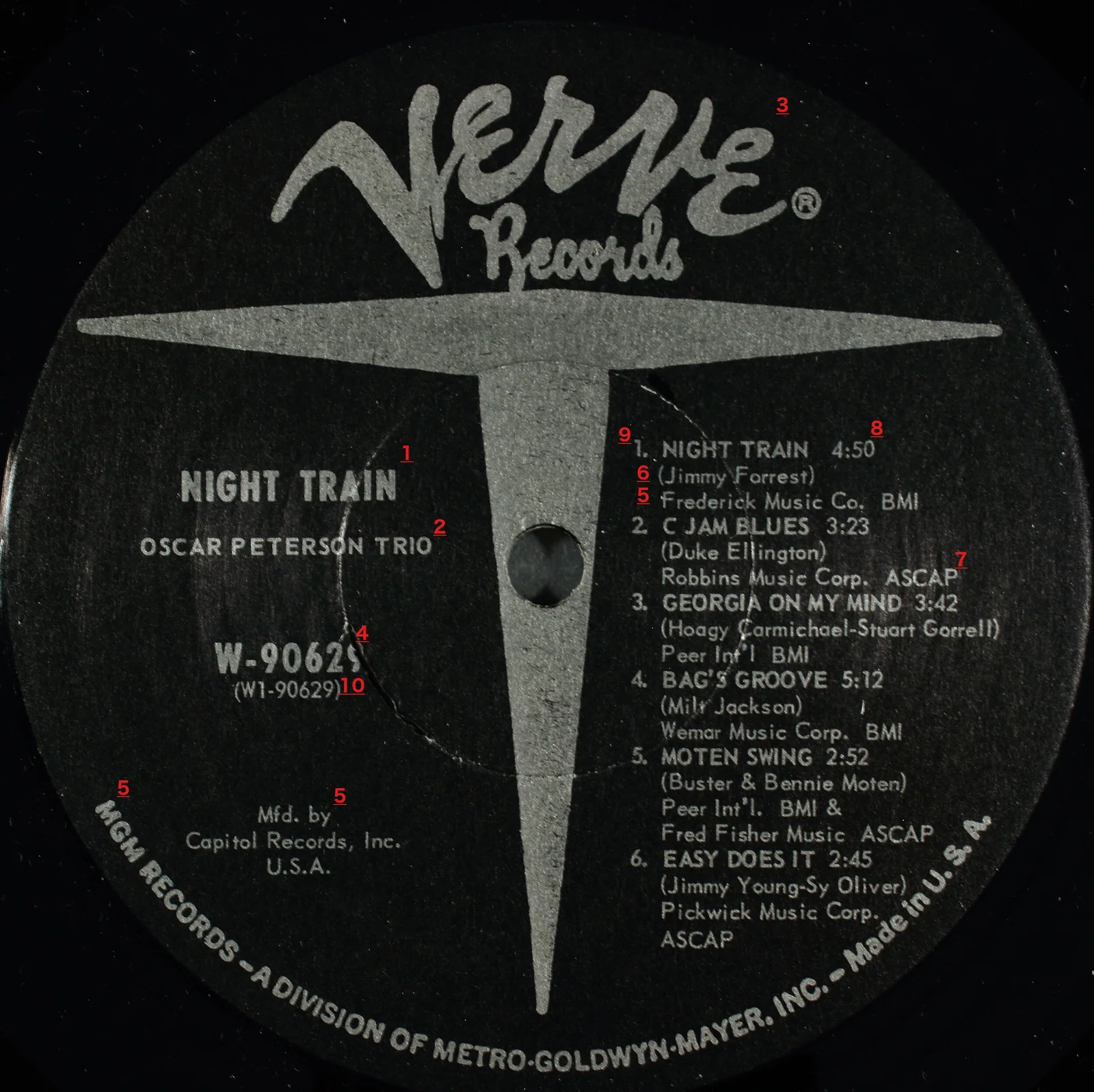
Let the rest of the record challenge your answer
Before accepting a runout match, compare the label photographs, catalogue numbers, format and release notes. The full pressing-identification workflow covers those checks.
Ask what distinguishes the candidate from its nearest alternative. If its notes identify a particular label layout, look for that layout on your copy. If you cannot see the relevant detail in the images, count it as unknown rather than matching.
For an unresolved inscription, ask a focused question in the Discogs Database Forum: include the artist, catalogue number, both runouts, photographs and links to the candidates. “Which release is this?” becomes much easier to answer when another collector can see precisely where the evidence stops.
Don't add a new release solely because your exact string isn't listed. Discogs' guide to adding a unique version cautions that minor matrix variations do not necessarily qualify.
If the evidence stops there, leave the identification open. Save your best transcription and note the unresolved detail, then put the record back safely. You'll have a specific question to return to when a clearer photograph or a better-documented release appears.